Coaches - Vision Health
Whether you’re coaching little league or a professional sports team, poor vision can significantly impede your athletes’ performance and safety. If your athlete can’t see the ball or other players, they will have a much more difficult time catching, passing, and safely maneuvering through obstacles and other players.
More practically, if someone else sees something better or reacts faster, your athlete is at a significant disadvantage. If you watch almost any sport, the player that truly stands out (the great not just good player), is the one that seems to see things just a little bit earlier and react just a little bit faster.
Encourage Regular visits to the Eye Doctor
Unfortunately, many athletes (especially children) do not realize they suffer from undiagnosed vision impairments. Coaches spend significant time and resources training athletes to compensate for poor vision without ever addressing the undiagnosed vision impairment. Addressing these vision impairments can make your training more effective, as well as improve your athlete’s performance and their safety. Therefore, it is important that you know the signs that your athlete may be suffering from a vision impairment and ensure that all your athletes visit an eye doctor for an in-person examination.
As a coach, if your athlete exhibits all the physical skills and proper technique to be successful, yet they still perform below expectation, consider a visual performance evaluation. If any of your athletes complain about the following problems, make sure they see an eye doctor for an in-person comprehensive eye examination:
Blurred Vision
Complaints of lack of clarity in sport
Difficulties in night ( indoor) vs daytime sport environments
Headaches
Double vision
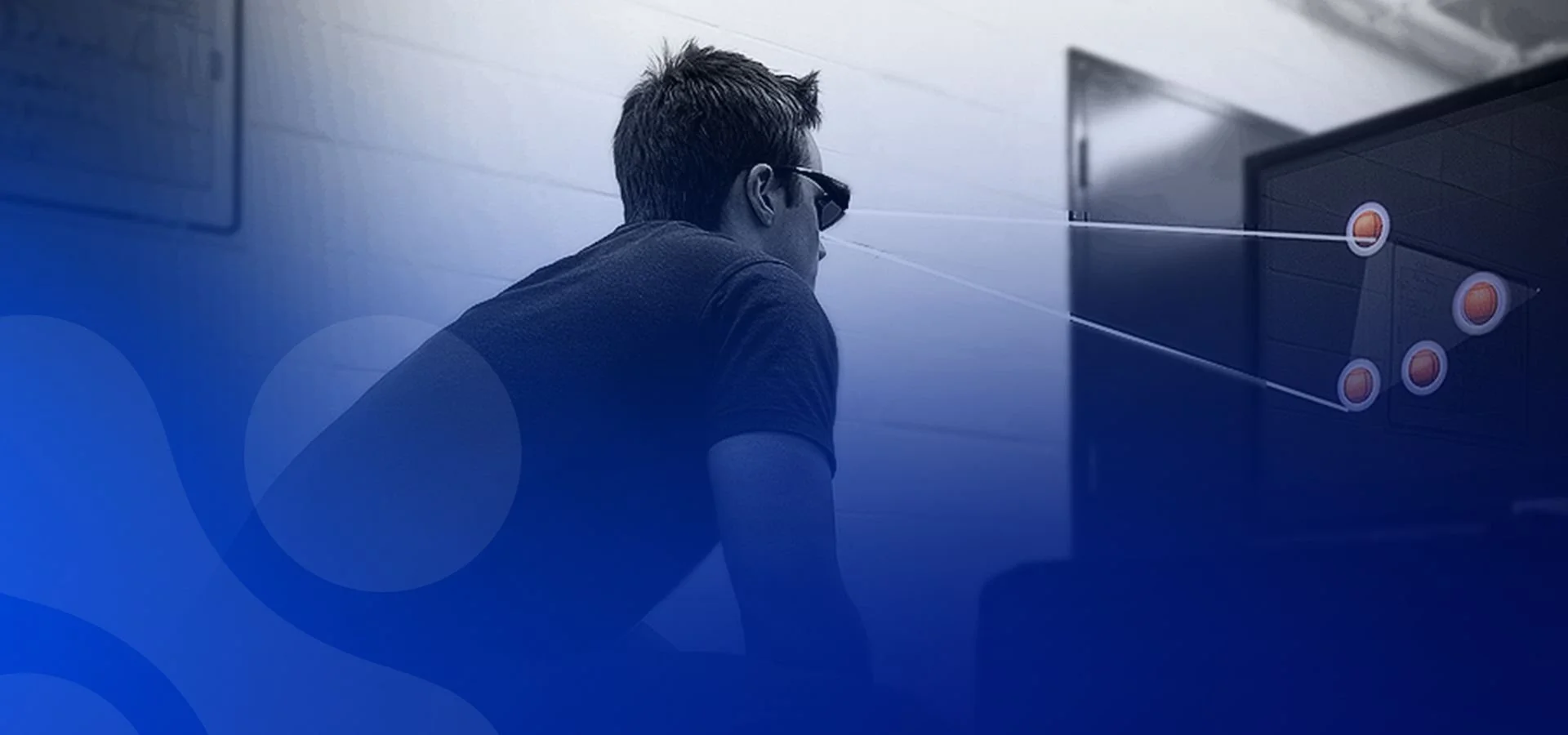
Difficulty tracking targets or the ball
Misjudging depth, missing catches, shooting balls high or low of targets
Timing Issues
Slowed decision making on the field
Consistent difficulties effectively running plays designed by the coach
Irritated eyes during sport
Difficulty with varying light levels
Screenings are not Enough
Remember, it is important that all your athletes regularly see an eye doctor even if they pass a vision screening or do not exhibit signs of vision impairment. Not all vision impairments have obvious warning signs or impact performance right away. It’s better for your athlete to see an eye doctor before the vision impairments are obvious and/or already impacting their performance.
Furthermore, your athletes’ vision may be “good enough” to pass a school screening, but their vision can still not be good enough for their sport. Therefore, all athletes should regularly see an eye doctor even if they pass vision screenings, especially if competing at a high level in sport to address additional factors, outside of acuity and eye health that constitute a “sports performance evaluation.
For more information on how you can improve eye health, see
National Eye Institute: Sports and your Eyes
Partners
Bausch + Lomb's mission is to help people see better to live better all over the world—that’s why we started and what we still strive for today. Through unwavering focus rooted in innovation, quality and craftsmanship, we continue to pursue our lifelong vision of protecting and enhancing the gift of sight through every phase of life.
deCervo is the neurotechnology leader in sports cognitive performance training. deCervo provides neurological analysis of baseball and softball hitters through a phone app and regular coaching sessions that deliver in-game results.
Sharpeye Shootout is a virtual reality game that is focused on your eye-hand reaction skills.
Sports Vision Pros is excited to partner with MacuHealth and discuss the benefits of their products for our athletes
We see a world where everybody is an athlete — united in the joy of movement. Driven by our passion for sport and our instinct for innovation, we aim to bring inspiration to every athlete in the world and to make sport a daily habit.
Sport-specific brain training for baseball, softball, and tennis. Pitch recognition training helps you become a more dangerous hitter.
Serve recognition training will have you breaking serve more often. Used by over 30,000 pro, college, Olympic, and youth athletes.
We believe that when people see brilliantly, they live brilliantly. That’s why we aspire to lead the world in innovating life-changing vision and eye care products. We are the largest eye care device company in the world, with a long history of firsts. And while we have been around for over 70 years, we are just getting started.
The RightEye Vision System™ is the world’s first commercialized eye-tracking solution for general healthcare and wellness—It is nothing like traditional vision tests.
NeuroTracker has been developed out of more than 25 years of cutting-edge neuroscience research at the Faubert Lab of the University of Montreal.
The Edge Trainer from Vizual Edge delivers the most advanced vision training available. Backed by 30 years of research and development, the Edge Trainer's web-based program is proven to help enhance timing, balance, eye-hand coordination, positional and spatial awareness, reaction speed and more to give you an edge in your sport!
Since 1965 Smith Optics has been innovating goggles, sunglasses, lenses, and frames to enhance an athlete's experience of their sport or activity. In continuing to innovate they have created helmets that integrate their eyewear seamlessly.
Johnson & Johnson Vision brings together cutting-edge insights, science, technology and people to encourage professionals and patients to proactively preserve and enhance sight for life.
Follow Us
September is Sports Eye Safety Month and SVP wants to highlight a recent video with Dr. Smithson and Prevent Blindness' CEO, Jeff Todd.
Learn the crucial techniques to identify hidden issues and ensure early intervention. Knowledge is power when it comes to brain heal. Check out this important video message from Dr.Keith Smithson
Dr. Smithson discusses Telehealth resources available to sports vision professionals with NeuroTracker.
He graduated from Pacific University, College of Optometry in 1994. Dr. Tad Buckingham has experience in fire and emergency services that allowed him to impact emergent eye care, and ocular injections, and to develop guidelines to manage medical emergencies in the primary care office.
Recently, we had an amazing conversation with Ernest Eugene from Orlando Magic and Eric Waters from Utah Jazz.
We talked about vision's influence on basketball players' performance, and how athletic trainers can implement sports vision techniques into athletes' training programs.
Dry eyes can influence your vision and cause problems during training or game, therefore it’s important to fix the issue.
There are many types of tints used in various types of glasses, and their function is not only to turn you into the number one fashionista (however, this function is also a good enough reason to buy a new pair of tint glasses into your collection😎).